


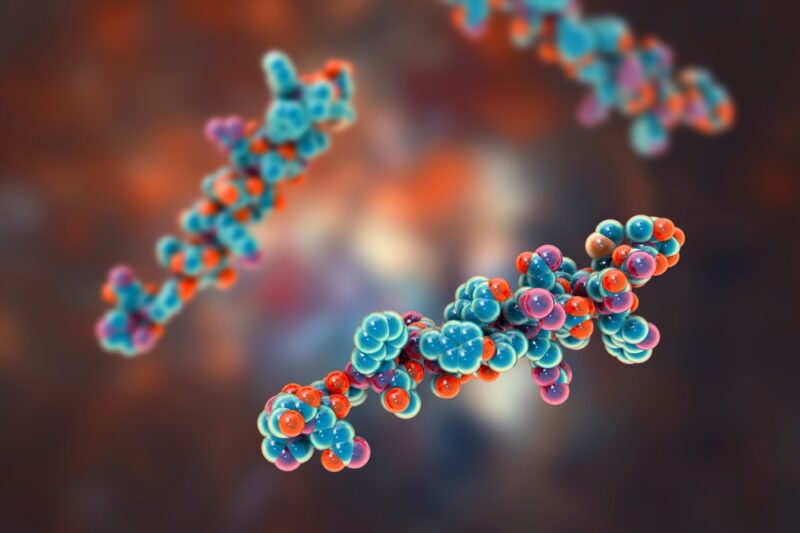
Making the Next Generation of Peptide Therapeutics Safely, Sustainably & Scalably
An overview of recent developments in solid-phase peptide synthesis: greener solvents, safer coupling reagents and the booming peptide therapeutic pipeline.
Peptides are having a moment. The spectacular commercial success of GLP-1 receptor agonists, like semaglutide (Ozempic, Wegovy, Rybelsus) and tirzepatide (Mounjaro & Zepbound), and a deepening understanding of peptide biology has ensured the global pipeline of peptide-based therapeutics has never been larger or more diverse. With nearly 100 approved peptide drugs worldwide, approximately 170 in clinical trials, and over 200 in preclinical development, demand for high-quality peptide synthesis reagents, resins and services is at an all-time high.
For those working in the field, the pace of methodological innovation has been striking. The prior five years have seen significant advances in coupling reagents, fundamental rethinks of solvent selection, driven by tightening regulatory constraints, and the emergence of genuinely practical green SPPS protocols that are beginning to make inroads into industrial manufacturing.
This article surveys those developments, with a focus on what they mean in practice for researchers and process chemists, highlighting where the field is heading.
1. The Peptide Therapeutics Boom: Why Synthesis Matters More Than Ever
Behind the blockbuster revenues, the commercial explosion of GLP-1 agonists has reshaped investment and manufacturing priorities across the global pharmaceutical industry. Semaglutide alone generated approximately $29 billion in revenue in 2024, while tirzepatide grew 124% year-over-year to reach $16.5 billion. The knock-on effect on peptide manufacturing capacity, reagent supply chains and synthesis innovation has been enormous. Securing reliable peptide manufacturing supply lines was in part behind Novo Holdings’ acquisition of CDMO Catalent.
But GLP-1s are just the most visible part of a much broader expansion. According to a 2025 review in Signal Transduction and Targeted Therapy (Nature Publishing Group), cancer has surpassed type 2 diabetes as the most common disease target in peptide research literature since 2020. Antimicrobial peptides, peptide-drug conjugates, radiopeptide therapies and stapled peptide approaches are all entering clinical development in numbers that would have been unthinkable a decade ago.
Why this matters for synthesis chemistry
More peptide drugs in development means more demand for the full toolkit of peptide synthesis – amino acids, coupling reagents, resins, cleavage reagents and purification materials. It also means that synthesis efficiency, yield, purity, and scalability are under greater scrutiny than ever before. The reagent choices made at the research bench increasingly need to be compatible with eventual scale-up.
2. Solid-Phase Peptide Synthesis in 2025: The State of the Art
Merrifield’s original solid-phase peptide synthesis (SPPS) methodology, introduced in 1963, remains the dominant approach for peptide production from research scale to manufacturing. The Fmoc/tBu strategy, developed in subsequent decades, is now the universal standard for most applications. But the field has not stood still.
Difficult sequences: where methodology still matters
Despite decades of refinement, certain peptide sequences remain genuinely challenging: aggregation-prone sequences, sterically hindered junctions, N-methyl amino acid insertions and long peptides (>50 residues) all continue to push the limits of standard SPPS protocols. Recent advances addressing these challenges include:
- Pseudoproline (Ψ Pro) dipeptide building blocks: incorporating pseudoproline units at Ser, Thr and Cys positions disrupts aggregation during chain assembly, dramatically improving yields for otherwise problematic sequences. These building blocks have become standard tools in the synthesis of GLP-1 analogues and other therapeutically relevant peptides.
- Microwave-assisted SPPS: microwave irradiation accelerates both coupling and Fmoc removal steps, enabling faster cycle times and improved yields for hindered sequences. Modern automated synthesisers increasingly incorporate microwave capability as standard.
- In-situ Fmoc removal protocols: a 2024 paper in Green Chemistry Letters & Reviews proposed eliminating the washing step between coupling and Fmoc deprotection, substantially reducing solvent consumption without compromising yield; a development with significant implications for both sustainability and cost at manufacturing scale.
| Fluorochem: Amino Acid Building Blocks |
| Fluorochem supplies a comprehensive range of Fmoc-protected amino acids, including standard proteinogenic amino acids and a wide selection of non-proteinogenic and unnatural amino acids (including pseudoprolines), fluorinated and speciality building blocks for the synthesis of modified and therapeutic peptides. |
Resins: the solid support landscape
Resin selection remains one of the most consequential choices in SPPS. The major classesc polystyrene-based, PEG-based and hybrid supports – each offer different swelling properties, loading capacities, and compatibility with different solvent systems. Key recent developments include:
- PEG-based resins gaining ground: for longer and more complex peptides, PEG-based supports offer superior swelling in a wider range of solvents, including popular alternatives to DMF, and tend to give better results for aggregation-prone sequences. Their adoption is accelerating as greener SPPS protocols develop.
- Rink amide and Wang resins remain dominant: for the majority of research-scale applications targeting peptides with C-terminal amides and acids respectively, these remain the favoured approaches, although linker chemistry continues to be refined to improve cleavage selectivity and purity of crude products.
| Fluorochem: SPPS Resins |
| Fluorochem supplies a range of SPPS resins including Rink amide, Wang, and 2-chlorotrityl supports, suitable for both Fmoc and Boc strategies. |
3. Coupling Reagents: A Field in Transition
The choice of coupling reagent for peptide synthesis is a decision of great technical and practical significance. It affects coupling efficiency, degree of racemisation, side-product profile, safety, cost, and – increasingly – regulatory acceptability. The field has evolved considerably beyond the classical DCC/HOBt approach; the landscape in 2025 offers more options, and more important distinctions, than ever before.
The shift away from benzotriazole-based reagents
HBTU and HATU have been workhorses of peptide synthesis generally, and SPPS specifically, for decades. Both generate highly reactive active esters and deliver fast, efficient coupling with low racemisation. HATU in particular has long been considered the gold standard for difficult couplings, owing to the anchimeric assistance provided by the pyridine nitrogen of HOAt, increasing the rate of amide formation and suppressing epimerisation.
However, the benzotriazole class carries two significant disadvantages that have become increasingly important:
- Explosion hazard: HOBt and HOAt are classified as potentially explosive in dry form, creating storage, shipping and handling challenges, particularly at scale and under COSHH/REACH-governed regulatory environments in the UK and EU.
- Allergenicity: HATU in particular has been associated with sensitisation reactions in laboratory workers exposed over extended periods; a concern that is taken increasingly seriously in industrial synthesis settings.
These limitations have accelerated the adoption of alternative coupling systems, most notably those based on the Oxyma scaffold.
Oxyma-based reagents: the new standard
Oxyma (ethyl 2-cyano-2-(hydroxyimino)acetate, 3849-21-6) was introduced as a non-explosive, non-allergenic alternative to HOBt and HOAt, and has become one of the most widely adopted additives in modern SPPS. Used in combination with DIC (diisopropylcarbodiimide, 693-13-0), DIC/Oxyma has become a standard coupling system for automated lab-scale synthesisers, offering:
- Minimal racemisation – superior to HOBt and comparable to HOAt in most applications
- Non-explosive solid – no hazardous goods restrictions on storage or shipping
- Excellent coupling efficiency in both manual and automated protocols
- Good compatibility with green solvent alternatives to DMF
A uronium salt incorporating the Oxyma leaving group with a dimethylmorpholino core, (1-Cyano-2-ethoxy-2-oxoethylidenaminooxy)dimethylaminomorpholinocarbenium hexafluorophosphate, 1075198-30-9, sold under the trademark COMU), extends its use to a reagent capable of single-pot coupling without pre-activation. Studies have shown COMU to deliver very low racemisation rates – in some models significantly lower than HATU – while offering improved solubility and a better safety profile. Its adoption in pharmaceutical manufacturing is growing.
Safety and Regulatory Note for UK/EU Laboratories
The restriction on DMF (effective December 2023 under EU REACH) also has implications for how coupling reagent solutions are prepared and stored. Oxyma-based systems show better compatibility with DMF alternatives such as 2-MeTHF (96-47-9), NFM (4394-85-8) and NMP (872-50-4) than many benzotriazole-based reagents, making the transition to greener solvent systems more tractable.
T3P (propylphosphonic anhydride): the green industrial preference
While Oxyma-based uronium reagents have transformed research-scale SPPS, propylphosphonic anhydride (68957-94-8) – known as T3P, also referred to as PPAA – has become the coupling reagent of choice for large-scale and industrial peptide manufacturing. T3P has been used for decades in solution-phase amide bond formation and its classification by the ACS Green Chemistry Institute Pharmaceutical Roundtable (GCIPR) as a green coupling reagent in 2019 has reinforced its position for manufacturing. In recent years, pioneering work by Albericio and co-workers (ChemistrySelect, 2021) has demonstrated its applicability to SPPS as well, opening the door to its use across the full synthesis workflow.
T3P’s advantages for manufacturing scale are compelling:
- Water-soluble, non-hazardous byproducts: the reaction byproduct is propylphosphonic acid – non-toxic, water-miscible, and easily removed by aqueous wash. This is a significant practical advantage over uronium reagents, whose tetramethylurea byproducts require more involved removal, and a considerable improvement over benzotriazole reagents.
- Non-explosive, non-allergenic: T3P carries none of the explosion risk associated with HOBt or HOAt, and none of the sensitisation concerns associated with HATU — critical considerations for large-scale GMP manufacturing environments.
- Low racemisation: T3P demonstrates excellent stereochemical fidelity in peptide bond formation, particularly when used with pyridine as base (Dunetz et al., Org. Lett. 2011) — a combination shown to be effective even for epimerisation-prone substrates.
- Supplied as a solution: T3P is commercially available as a 50% solution in ethyl acetate, DMF, or other solvents – no weighing of solids, reduced dust exposure, and convenient dosing for automated or continuous manufacturing processes. Stability of up to two years in solution adds further practical advantage.
- Green solvent compatibility: T3P shows good compatibility with green solvent alternatives including ethyl acetate, THF and acetonitrile, making it a natural partner for DMF-free synthesis workflows. Its sensitivity to water means protic solvents require careful management, but this is well understood in process chemistry settings.
T3P is well established in large-scale industrial amide bond formation — its use in the synthesis of drugs including dacomitinib (Pfizer) and darolutamide is documented — and its footprint in peptide API manufacturing is growing as the industry seeks reagents that combine performance with a cleaner safety and environmental profile.
Coupling reagent selection guide
The table below summarises the principal coupling reagents used in SPPS, with practical guidance on selection.
| Reagent | Active Ester | Racemisation Risk | Safety Profile | Best Use Case |
| DIC (693-13-0) / Oxyma (3849-21-6) | Oxyma ester | Low | Non-explosive | Routine automated SPPS |
| HBTU (94790-37-1) | OBt ester | Moderate | Potential explosive | General coupling, cost-effective |
| HATU (148893-10-1) | OAt ester | Low | Potential explosive; allergen | Difficult sequences, fast coupling |
| Uronium-Oxyma (1075198-30-9) | Oxyma ester | Very low | Non-explosive, low allergenicity | High-purity target peptides |
| PyBOP (128625-52-5) | OBt ester | Low–moderate | Phosphonium — handle with care | Cyclisation, fragment coupling |
| DCC (538-75-0) / HOBt (123333-53-9) | OBt ester | Moderate | HOBt explosive dry; DCU insoluble | Solution-phase, classical methods |
| T3P/PPAA (68957-94-8) | Mixed anhydride | Very low | Non-explosive, non-allergenic, water-soluble byproducts | Large-scale/industrial manufacturing; solution-phase; green workflows |
| Fluorochem: Coupling Reagents |
| Fluorochem supplies a comprehensive range of peptide coupling reagents and additives, including HBTU, HATU, HCTU, PyBOP, PyAOP, DIC, DCC, Oxyma-based, HOBt and more. Full technical data and safety documentation are available for all products. |
4. The Green SPPS Revolution: Responding to DMF Restriction
Recent acceleration in green chemistry innovation for peptide synthesis has been driven by the EU’s restriction on DMF. Effective from December 2023, DMF is restricted for industrial and professional use at concentrations above 0.3%. This change sent shockwaves through the peptide synthesis community, given DMF’s prior near-universal use as the primary solvent for coupling, washing and Fmoc removal in SPPS.
There has been a substantial response from the research community. The previously mentioned 2019 perspective by the ACS GCIPR focussed on greener peptide processes as a critical unmet need: since then, the volume of published work on DMF alternatives and green SPPS protocols has accelerated dramatically.
DMF alternatives: where the field stands
Several solvents have emerged as credible alternatives to DMF for different aspects of the SPPS workflow:
- N-formylmorpholine (NFM, 4394-85-8): structurally analogous to DMF but with a significantly improved toxicological and regulatory profile. NFM shows good performance as a coupling and washing solvent and is increasingly used as a direct DMF substitute in both research and manufacturing settings.
- 2-Methyltetrahydrofuran (2-MeTHF, 96-47-9): a bio-derived solvent with good solvating properties and an improved environmental profile. Particularly effective for coupling steps in combination with Oxyma-based reagents, though less effective as a standalone Fmoc removal solvent. A 2016 paper by Jad et al. reported its successful use for coupling, paving the way for further development.
- N-butylpyrrolidone (NBP, 3470-98-2): a higher-boiling analogue of NMP with reduced reproductive toxicity concerns. Effective across multiple SPPS steps and increasingly adopted in industrial process development.
- γ-Valerolactone (GVL, 108-29-2): a bio-derived lactone with reasonable solvating properties. Investigated by Albericio and co-workers as a green Fmoc removal solvent; while promising, some limitations with longer sequences remain.
- Aqueous SPPS (ASPPS): perhaps the most ambitious green chemistry approach – replacing organic solvents entirely with water/IPA mixtures. A 2025 paper in ACS Sustainable Chemistry & Engineering demonstrated successful ASPPS using standard techniques and Fmoc/tBu-protected amino acids. Progress here is genuine but practical limitations for long and complex sequences remain.
Practical Guidance
For most laboratories transitioning away from DMF, a hybrid approach – using NFM or NBP for most steps with 2-MeTHF for coupling – currently offers the best balance of performance and sustainability. Full elimination of DMF for complex peptides remains challenging but is achievable for shorter sequences with careful optimisation.
Reducing TFA in cleavage and deprotection
TFA (trifluoroacetic acid, 76-05-1) is the standard cleavage reagent for Fmoc SPPS, used to remove side-chain protecting groups and release the peptide from the resin. It is used in large volumes and generates significant waste. Efforts to reduce TFA consumption include:
- Minimal-protection SPPS (MP-SPPS): a strategy in which side-chain unprotected amino acids are incorporated where possible, reducing the volume of TFA required for global deprotection. Successfully applied in the manufacturing of peptide APIs, though scope is currently limited to selected residue types.
- Alternative cleavage cocktails: diluted TFA solutions with scavenger optimisation can reduce total TFA consumption significantly while maintaining cleavage efficiency and product purity.
- TFA recycling: industrial-scale synthesis increasingly incorporates TFA recovery and recycling processes, reducing both cost and environmental impact.
| Fluorochem: TFA and Cleavage Reagents |
| Fluorochem supplies REACH-registered TFA with full GHS-compliant SDS documentation – including occupational exposure limit data and waste handling guidance relevant to both UK and EU regulatory frameworks. Scavenger cocktail components including triisopropylsilane (TIS, 6485-79-6) and thioanisole (100-68-5) are also available. |
5. Protecting Group Chemistry: Incremental but Important Advances
The Fmoc/tBu orthogonal protecting group strategy has been the dominant paradigm in SPPS since its widespread adoption in the 1980s and 1990s. Its fundamental architecture – base-labile Fmoc for backbone protection, acid-labile tBu and Pbf groups for side chains – remains sound. But refinements continue.
- Hmb backbone protection: the 2-hydroxy-4-methoxybenzyl (Hmb) backbone amide protecting group has become an important tool for disrupting aggregation in difficult sequences. Incorporation at strategic positions can rescue syntheses that would otherwise fail due to on-resin aggregation.
- Pseudoproline dipeptides: as mentioned above, Ψ Pro dipeptides incorporating Ser, Thr, or Cys offer an elegant solution to aggregation without the need for backbone protection, and are now standard in the synthesis of GLP-1 analogues and other therapeutic peptides.
- Side-chain protecting group innovation for non-natural amino acids: as the incorporation of non-natural amino acids into therapeutic peptides increases, the development of appropriate protecting group strategies for unusual residues has become an active area of research.
6. Purification: The Underappreciated Bottleneck
For all the innovation in coupling chemistry and solvent selection, purification remains one of the most resource-intensive steps in peptide production – both in terms of solvent consumption and cost. Preparative reversed-phase HPLC is the dominant purification method, but it has a significant environmental footprint.
Key developments in greener and more efficient purification include:
- Catch-and-release purification: a number of approaches developed, with a handful commercialised. These usually involve the attachment of a linker to the N-terminus of the peptide, allowing the finished peptide to be immobilised while by-products are removed. Ideally, the release is traceless.
- Supercritical fluid chromatography (SFC): growing adoption for the separation of diastereomeric peptides and chiral impurities, with a significantly reduced organic solvent footprint compared to conventional HPLC.
- Silica quality in preparative HPLC: the performance of preparative chromatography is highly sensitive to silica quality – particle size distribution, surface chemistry and metal content all affect resolution and column lifetime. Optimal silica media remain essential consumables throughout the peptide synthesis workflow.
| Fluorochem: Silica for Peptide Purification |
| Fluorochem supplies a range of silica products, covering most quality requirements and use cases. Some available with full REACH registration and detailed GHS-compliant SDS documentation, including current UK and EU occupational exposure limit data. |
7. Custom Peptide Synthesis: When You Need More Than Reagents
Not every research group has the capacity, equipment, or expertise to synthesise complex peptides in-house. For challenging targets: long sequences, heavily modified peptides, macrocyclic structures, isotopically labelled compounds or large quantities – custom peptide synthesis services offer a practical alternative.
- Synthesis capability: maximum sequence length, ability to incorporate non-natural amino acids, N- and C-terminal modifications, cyclisation, PEGylation, and other structural modifications
- Analytical characterisation: HPLC purity data, mass spectrometry, and, for regulated applications, full CoA documentation
- Regulatory compliance: GMP capability for peptides intended for preclinical or clinical use, including ICH Q7-aligned quality systems
- Scale: from milligram research quantities to gram or kilogram scale for process development and clinical supply
| Fluorochem Custom Peptide Synthesis Service |
| With ChemExpress, Fluorochem offers a custom peptide synthesis service spanning research-scale to process scale, with full analytical characterisation. Whether you need a straightforward linear peptide, a complex modified sequence or a cyclic peptide, Fluorochem’s synthesis team can deliver to your specification with the documentation required for regulated applications. |
Conclusion: A Fast-Moving Field
Peptide synthesis is no longer a mature, static methodology: it is an active, rapidly evolving field, driven by the twin pressures of therapeutic demand and regulatory change. The restriction of DMF has forced genuine innovation in solvent selection. The limitations of benzotriazole-based coupling reagents have accelerated the transition to alternative coupling systems. And the commercial success of GLP-1 agonists has focused attention on synthesis efficiency and scalability in ways that are reshaping the entire supply chain.
For researchers and process chemists working in this space, staying current with reagent innovations is not merely academically interesting; it has direct practical consequences for yield, purity, safety, cost and regulatory compliance.
Fluorochem supports peptide synthesis programmes across the UK and Europe with a comprehensive catalogue of amino acids, coupling reagents, resins and cleavage materials along with custom peptide synthesis services for when in-house capacity is insufficient.
Explore Fluorochem’s peptide synthesis catalogue
Browse amino acids, coupling reagents, resins and speciality reagents for SPPS at fluorochem.co.uk, or contact our technical team to discuss custom synthesis requirements.
Key References & Further Reading
- Advance in peptide-based drug development: delivery platforms, therapeutics and vaccines. Signal Transduction and Targeted Therapy (Nature Publishing Group), 2025. doi:10.1038/s41392-024-02107-5
- Novo completes $16.5bn takeover of Catalent – PharmaPhorum
- Sustainability Challenges in Peptide Synthesis and Purification: From R&D to Production. J. Org. Chem., ACS Publications. doi:10.1021/acs.joc.8b03001
- Green Transformation of Solid-Phase Peptide Synthesis. ACS Sustainable Chemistry & Engineering. doi:10.1021/acssuschemeng.8b06520
- Sustainable Approaches in Solid-phase Peptide Synthesis (SPPS). In: Sustainability in Tides Chemistry, Royal Society of Chemistry, 2024, ch. 4, pp. 50–84.
- Toward sustainable solid-phase peptide synthesis strategy — in situ Fmoc removal. Green Chemistry Letters & Reviews, 2024. doi:10.1080/17518253.2024.2325993
- Comparison of the Effects of 5- and 6-HOAt on Model Peptide Coupling Reactions Relative to the Cases for the 4- and 7-Isomers. Organic Letters, 2000. doi:10.1021/ol006013z
- Propylphosphonic Anhydride (T3P®) as Coupling Reagent for Solid-Phase Peptide Synthesis. Chemistry Select, 2021. doi:10.1002/slct.202100123
- 2-Methyltetrahydrofuran and cyclopentyl methyl ether for green solid-phase peptide synthesis. Amino Acids, 2015. doi: 10.1007/s00726-015-2095-x
- Scope and Limitations of γ-Valerolactone (GVL) as a Green Solvent to be Used with Base for Fmoc Removal in Solid Phase Peptide Synthesis. Molecules, 2019. doi:10.3390/molecules24214004
- Aqueous Solid-Phase Peptide Synthesis (ASPPS) using Standard Fmoc/tBu-Protected Amino Acids. ACS Sustainable Chemistry & Engineering, 2025. doi:10.1021/acssuschemeng.5c09191
- Epimerisation in Peptide Synthesis. Molecules, 2023. doi:10.3390/molecules28248017
- A traceless catch-and-release method for rapid peptide purification. Journal of Peptide Science, 2019. doi:10.1002/psc.3136
- Large-scale purification of a deprotected macrocyclic peptide by supercritical fluid chromatography (SFC) integrated with liquid chromatography in discovery chemistry. Journal of Chromatography A, 2024. doi:10.1016/j.chroma.2024.465112