



Coenza at Fluorochem – Fueling Biochemical Research, Enzymology, and Metabolic Studies
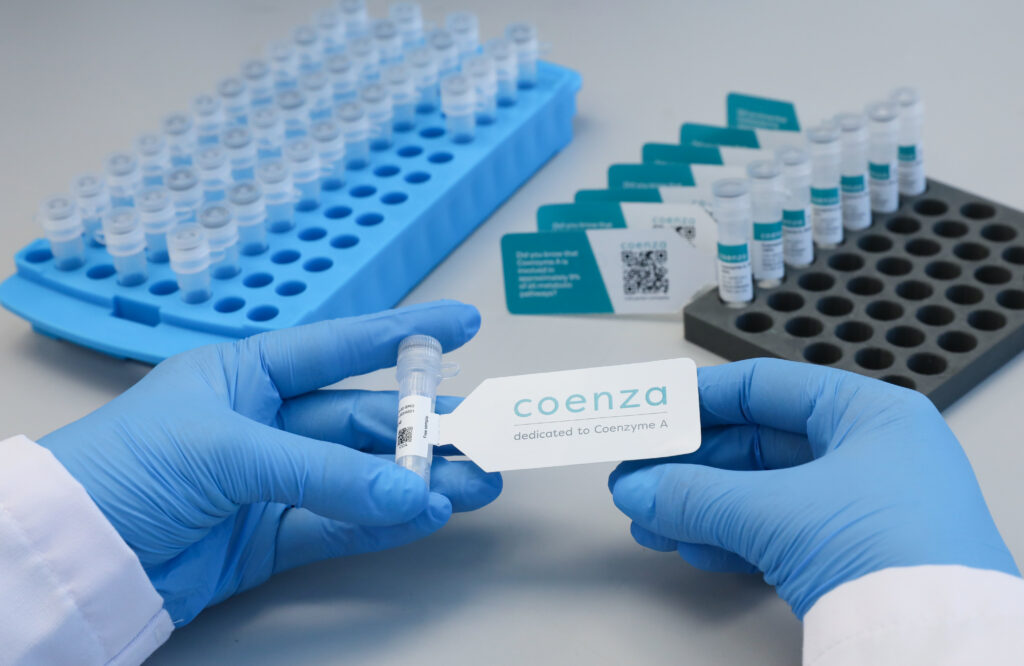
Coenza is a European manufacturer of Coenzyme A and phosphate-based biochemicals for life science research. With an extensive catalogue of over 70 CoA derivatives and proven custom synthesis capabilities, Coenza delivers both standard compounds and tailored solutions for demanding research applications.
Broad Product Portfolio
Coenza’s catalogue includes over 70 CoA-based compounds in multiple salt forms:
Coenzyme A (various salts)
Short-chain Acyl-CoA derivatives (e.g., Acetyl-CoA, Propionyl-CoA, Isovaleryl-CoA)
Long-chain Acyl-CoA derivatives (e.g., Palmitoyl-CoA, Stearoyl-CoA, Oleoyl-CoA)
Specialized CoA intermediates (e.g., 4′-Phosphopantetheine, Diphosphopantetheine)
All products are manufactured in Europe and supplied at over 95% purity, verified by HPLC with additional analytical methods such as NMR, LC-MS, and AAS for cation determination. These high-quality reagents support applications from enzyme activity assays to metabolic flux analysis and diagnostics development.
Custom Synthesis for Coenzyme A & Phosphate-Based Compounds
For CoA derivatives and phosphate-based biochemicals not in standard catalogues, Coenza offers efficient custom synthesis from milligrams to commercial-scale production. With turnaround times of 6–8 weeks, depending on compound complexity, researchers receive their materials quickly. Each synthesis includes relevant QC documentation ensuring high purity, reproducibility, and batch-to-batch consistency.
Trusted by research institutions across Europe, Coenza products are available through Fluorochem with dedicated technical support.

Why Does High-Quality Coenzyme A Matter?
Coenzyme A (CoA) is a fundamental cofactor in cellular metabolism. As a universal acyl group carrier, it plays a central role in more than 100 metabolic reactions, from essential energy production as part of the citric acid cycle, to the biosynthesis and oxidation of fatty acids, the regulation of gene expression and the post-translational modification of proteins. For researchers in the life sciences, access to high-purity CoA and derivatives is a prerequisite for reproducible, publication worthy results.
Coenzyme A in Metabolic Research
Understanding how cells produce and consume energy requires the precise measurement and manipulation of CoA-dependent pathways. Acetyl-CoA is at the centre of carbohydrate, fat and protein metabolism, making it indispensable for metabolic flux analysis (the mapping of carbon flow through these metabolic networks). Researchers studying mitochondrial function, cancer metabolism or the effects of dietary intervention routinely depend on Acetyl-CoA standards of verified purity.
Other short-chain derivatives such as Propionyl-CoA and Malonyl-CoA are critical intermediates in branched-chain amino acid catabolism and fatty acid biosynthesis respectively, and are widely used as substrates and reference compounds in targeted metabolomics workflows.
Acyl-CoA Derivatives in Enzyme Assays
Acyl-CoA thioesters are the native substrates of a broad class of enzymes – acetyltransferases, acyltransferases, thiolases and dehydrogenases among them. Developing and validating assays for these enzymes demands substrates that are chemically well-defined, correctly characterised by salt form, and reliably consistent between batches.
Palmitoyl-CoA and Oleoyl-CoA, for example, are standard substrates in assays measuring long-chain fatty acyl-CoA synthetase and carnitine palmitoyltransferase activity — enzymes implicated in metabolic disease, obesity research, and mitochondrial dysfunction. Stearoyl-CoA is similarly used in desaturase enzyme studies. For all of these applications, purity verified by HPLC, NMR, and LC-MS is essential to avoid substrate interference and ensure kinetic accuracy.
CoA Derivatives in Drug Discovery
CoA metabolism has emerged as a compelling area in drug discovery, particularly in oncology and metabolic disease. Enzymes in the CoA biosynthetic pathway, as well as CoA-dependent acyltransferases, represent validated or emerging drug targets. High-quality CoA derivatives are essential tools for:
- Target engagement assays — measuring inhibitor binding to CoA-dependent enzymes
- Biochemical screening — as substrates or co-substrates in high-throughput enzyme inhibition assays
- Mechanistic studies — characterising the mode of action of candidate compounds against metabolic targets
Specialised intermediates such as 4′-Phosphopantetheine and Dephospho-CoA are also increasingly relevant in the study of CoA biosynthesis itself, particularly for researchers exploring pantothenate kinase (PanK) inhibitors and related antibacterial or antifungal targets.
Coenza Products